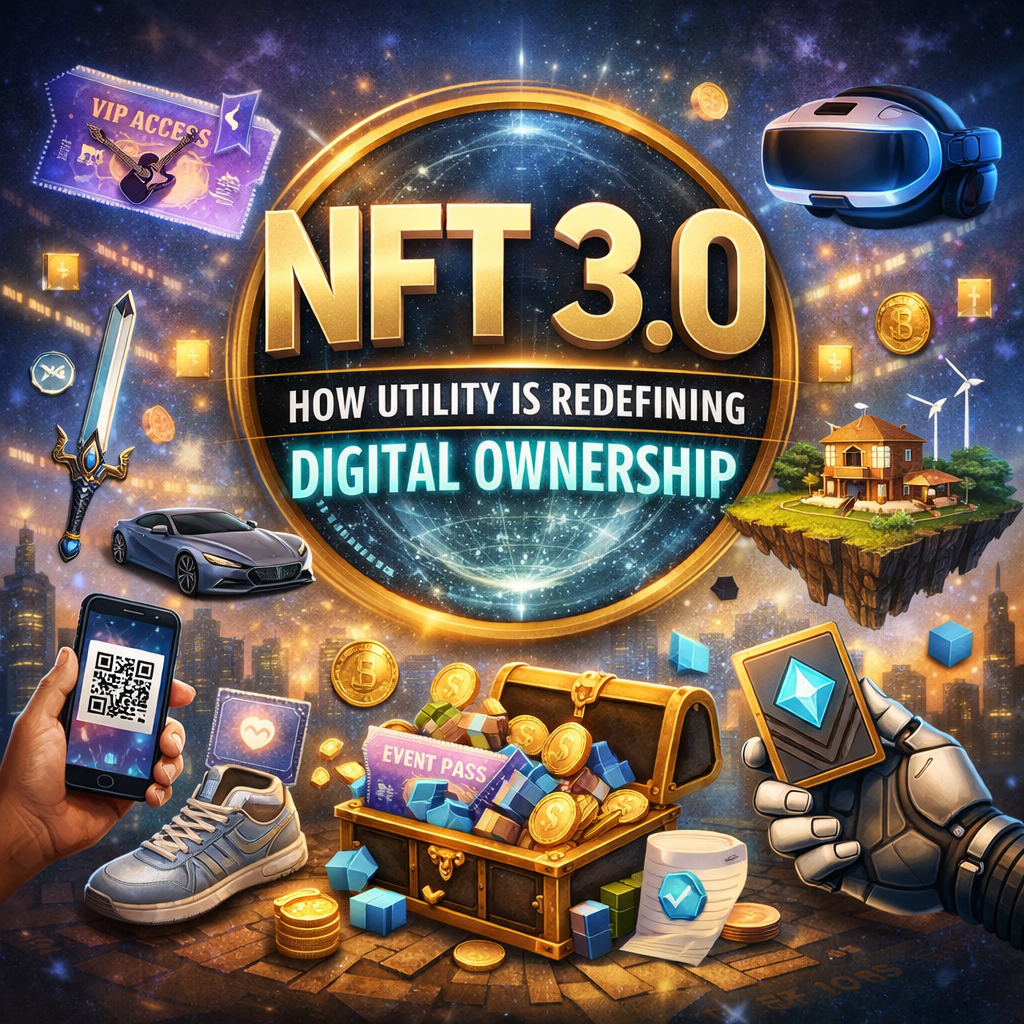
The era of speculative JPEGs is fading. NFT 3.0 is here, and it’s transforming the conversation from “what does it look like?” to “what does it do?” This new paradigm is moving beyond art and collectibles to embed real-world utility, tangible rights, and dynamic functionality into the very code of digital ownership.
The Evolution: From Status Symbol to Tool
-
NFT 1.0 (The PFP Era): Profile-picture collectibles. Value driven by community status, rarity, and speculation (e.g., early CryptoPunks, Bored Ape Yacht Club). The question was: “Do you own one?”
-
NFT 2.0 (The Artistic Expansion): Digital art marketplaces and creative experimentation. Value driven by artist reputation and artistic merit (e.g., Art Blocks, generative art). The question was: “Who created it?”
-
NFT 3.0 (The Utility Layer): Functional digital assets with baked-in benefits. Value driven by practical use cases, access, and revenue streams. The question is: “What can I do with it?”
The Core Pillars of NFT 3.0 Utility
Utility is not a single feature, but a spectrum of integrated benefits. Here are the key dimensions redefining ownership:
1. Access & Membership (The Digital Key)
NFTs are becoming immutable membership cards for:
-
Physical World: Access to exclusive events, private clubs, or co-working spaces.
-
Digital Ecosystems: Gated communities (Discord, Telegram), premium software tiers, or specialized knowledge hubs.
-
Example: PROOF Collective uses its NFT as a pass to IRL events, artist mint allowlists, and high-level research.
2. Intellectual Property & Commercial Rights
Moving beyond personal use to actual ownership rights:
-
Character Licensing: Owning an NFT character and licensing it for games, animations, or merchandise (e.g., Moonbirds shifting to a CC0 model, enabling community-driven commercialization).
-
Royalty Sharing: NFT holders receive a percentage of revenue from projects, albums, or brands they support.
-
Example: Hollywood studios experimenting with issuing NFTs that grant a share of a film’s streaming revenue.
3. Gaming & The Metaverse (True Digital Asset Portability)
NFTs as functional, interoperable in-game assets:
-
Play-to-Earn & Own: Weapons, skins, and land that you truly own and can sell or use across compatible games.
-
Interoperability Dream: A sword earned in one game being usable as a cosmetic item in another, powered by shared standards.
-
Example: Games like Parallel building entire economies where every card and item is a tradable, usable NFT.
4. Real-World Asset (RWA) Tokenization
Bridging the physical and digital divide:
-
Fractional Ownership: NFTs representing shares in real estate, luxury goods (watches, handbags), or fine art.
-
Proof of Provenance: Luxury brands (e.g., LVMH, Breitling) using NFTs as unforgeable digital certificates of authenticity and ownership history.
5. Dynamic & Evolving NFTs
NFTs that change based on conditions or holder actions:
-
Leveling Up: A character NFT that gains visual traits or abilities based on in-game achievements.
-
Interactive Art: Art that evolves based on holder voting, weather data, or market activity.
-
Example: World of Women’s “Gateway” NFTs, which evolved based on a holder’s journey and participation.
The Technology Enabling Utility 3.0
-
Smart Contract Complexity: Advanced, modular contracts that can execute functions, distribute royalties, and verify ownership rights automatically.
-
Decentralized Physical Infrastructure Networks (DePIN): Projects like Helium use NFTs to represent ownership of physical hardware (like hotspots), which then earn tokens for providing service.
-
Zero-Knowledge Proofs (ZKPs): Allowing for private verification of ownership or credentials (e.g., proving you hold a concert ticket NFT without revealing your entire wallet history).
Critical Challenges & The Path Forward
-
Regulatory Uncertainty: When does a utility NFT become a security? Clarity is needed.
-
User Experience (UX): Seamless interaction with utility (keyless access, simple royalty claims) is still a barrier.
-
Interoperability Standards: For true cross-platform utility, common technical and legal standards are essential.
-
Sustainability Shift: A move toward proof-of-stake blockchains (like Ethereum post-Merge) is addressing environmental concerns.
Leave a Reply